Beyond Hits and Misses: A Parent’s Role in a Hitter’s Growth
Success in youth baseball and softball is often measured by hits, home runs, and batting averages. But true player development is about much more than the scoreboard. Building youth baseball confidence requires a different approach—one that focuses on growth, resilience, and support rather than statistics. One of the biggest influences on a young hitter’s growth isn’t their swing—it’s the support system around them.
Every youth baseball or softball parent has seen it.
Your child steps into the batter’s box.
The pitcher throws a strike right down the middle.
They don’t swing.
A few pitches later, they’re walking back to the dugout frustrated, and your first thought is:
“Why didn’t you just swing?”
The answer is usually more complicated than mechanics.
What looks like hesitation is often a confidence issue, not a hitting issue.
As parents, it’s easy to focus on results. We celebrate hits, worry about strikeouts, and want our children to succeed. But some of the most important growth in a young hitter’s journey happens long before the ball leaves the bat.
Baseball and Softball Are Games of Failure
One of the hardest lessons for young players—and parents—to understand is that failure is built into the game.
Even the best hitters in Major League Baseball fail most of the time. A player who gets a hit in 3 out of every 10 at-bats is considered highly successful.
Think about that.
A player can fail 70% of the time and still be one of the best hitters on the field.
For young athletes, however, failure often feels personal.
A strikeout can feel embarrassing.
A weak ground ball can feel disappointing.
A bad game can feel like the end of the world.
Helping children understand that failure is part of growth may be one of the most valuable lessons sports can teach.
Confidence Doesn’t Come From Success Alone
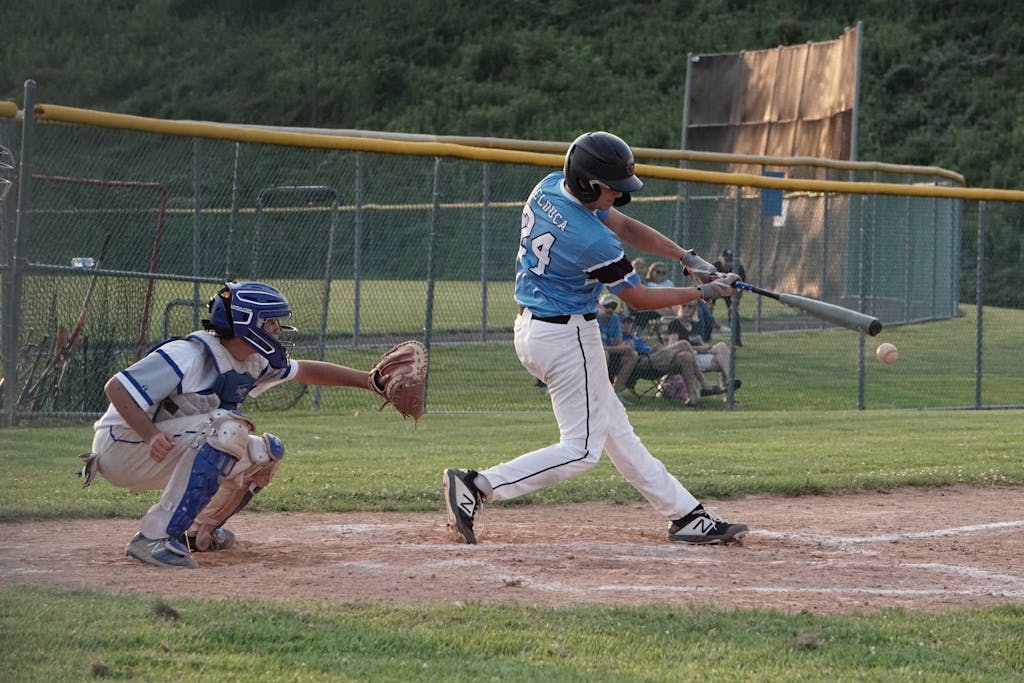
Many parents believe confidence comes from getting hits.
In reality, confidence often comes from learning how to handle failure.
Confident hitters aren’t players who never struggle.
Confident hitters are players who understand that a strikeout, a pop-up, or a bad game doesn’t define them.
They learn that they can fail, learn, improve, and come back stronger.
That type of confidence lasts much longer than any batting average.
Focus on the Process, Not the Result
It’s natural to ask:
“Did you get a hit today?”
But sometimes the better questions are:
- Did you swing at good pitches?
- Did you compete in every at-bat?
- Did you stay positive after making a mistake?
- Did you learn something today?
- Did you give your best effort?
Results matter, but they don’t tell the entire story.
A player can have a great at-bat and make an out.
A player can get a hit on a poorly executed swing.
The process is what drives long-term development.
When parents praise effort, preparation, attitude, and resilience, young athletes learn to focus on things they can control.
The Ride Home Matters
For many young athletes, confidence isn’t built during practice.
It’s built during the drive home after a difficult game.
A player who struck out three times already knows they struggled.
They don’t need a detailed breakdown of every mistake before they get out of the parking lot.
What they need most is support.
Before discussing mechanics, consider asking:
- Did you have fun today?
- What was your favorite part of the game?
- What did you learn?
- What are you excited to work on next?
The ride home should feel safe.
Players who know their parents support them regardless of performance are more likely to take risks, compete freely, and enjoy the game.
Let Coaches Coach
One of the biggest challenges in youth sports is information overload.
A player may receive instruction from:
- Coaches
- Private instructors
- Teammates
- Social media
- YouTube videos
- Parents
Too much instruction can create confusion.
Parents don’t need to be their child’s hitting coach.
Often, the most valuable role a parent can play is being their biggest supporter.
Encourage effort.
Celebrate growth.
Provide perspective.
Let the coaches handle most of the technical adjustments.
Growth Isn’t Always Linear
Every young hitter experiences ups and downs.
There will be hot streaks.
There will be slumps.
There will be periods where it feels like nothing is working.
This is normal.
Player development rarely follows a straight line.
The athletes who ultimately succeed are usually not the ones who avoid adversity.
They’re the ones who learn how to keep moving forward when adversity inevitably arrives.
Travel Baseball Can Increase the Pressure
Travel baseball and softball can create incredible opportunities for player development, competition, and lifelong friendships.
However, travel ball can also increase the pressure young athletes feel.
Tournament weekends, showcase events, rankings, and highly competitive rosters can make every at-bat seem important. Players may begin to feel that their value is tied to their performance rather than their effort and growth.
The strongest travel baseball and softball organizations understand that long-term player development matters more than short-term results.
The goal is not simply to produce hits this weekend.
The goal is to help players build confidence, develop skills, learn resilience, and prepare for future opportunities both on and off the field.
Parents can help by keeping the focus on improvement rather than statistics and remembering that a player’s development is measured over years—not individual games or tournaments. Understanding your child’s personality, goals, and readiness for travel sports can also play a major role in their development. Read our guide on Know Your Kid: Making the Right Travel Baseball or Softball Decision.
Parents researching travel baseball and softball organizations can compare coaching philosophies, player development approaches, and program offerings through organization profiles such as Building Champions Baseball Academy and Mac N Seitz.
What Young Hitters Need Most
At the end of the day, most young players don’t need perfect mechanics.
They don’t need perfect statistics.
They don’t need perfect seasons.
They need adults who believe in them.
They need coaches who teach them.
They need parents who support them.
And they need the freedom to fail, learn, and grow.
Final Thoughts
Years from now, your child probably won’t remember every hit, strikeout, or batting average.
They will remember how the adults around them made them feel.
The goal isn’t to raise a perfect hitter.
The goal is to raise a confident young person who isn’t afraid to fail, learn, and keep competing.
Sometimes the most important thing a parent can say after a tough game is:
“I’m proud of you. Keep swinging.”
If you’re evaluating travel baseball or softball organizations, remember that coaching philosophy and player development matter just as much as wins and losses. Browse our Travel Baseball & Softball Organization Directory to compare programs and find the right fit for your player.