The Reality of College Baseball and Softball Scholarships: What Parents Need to Know
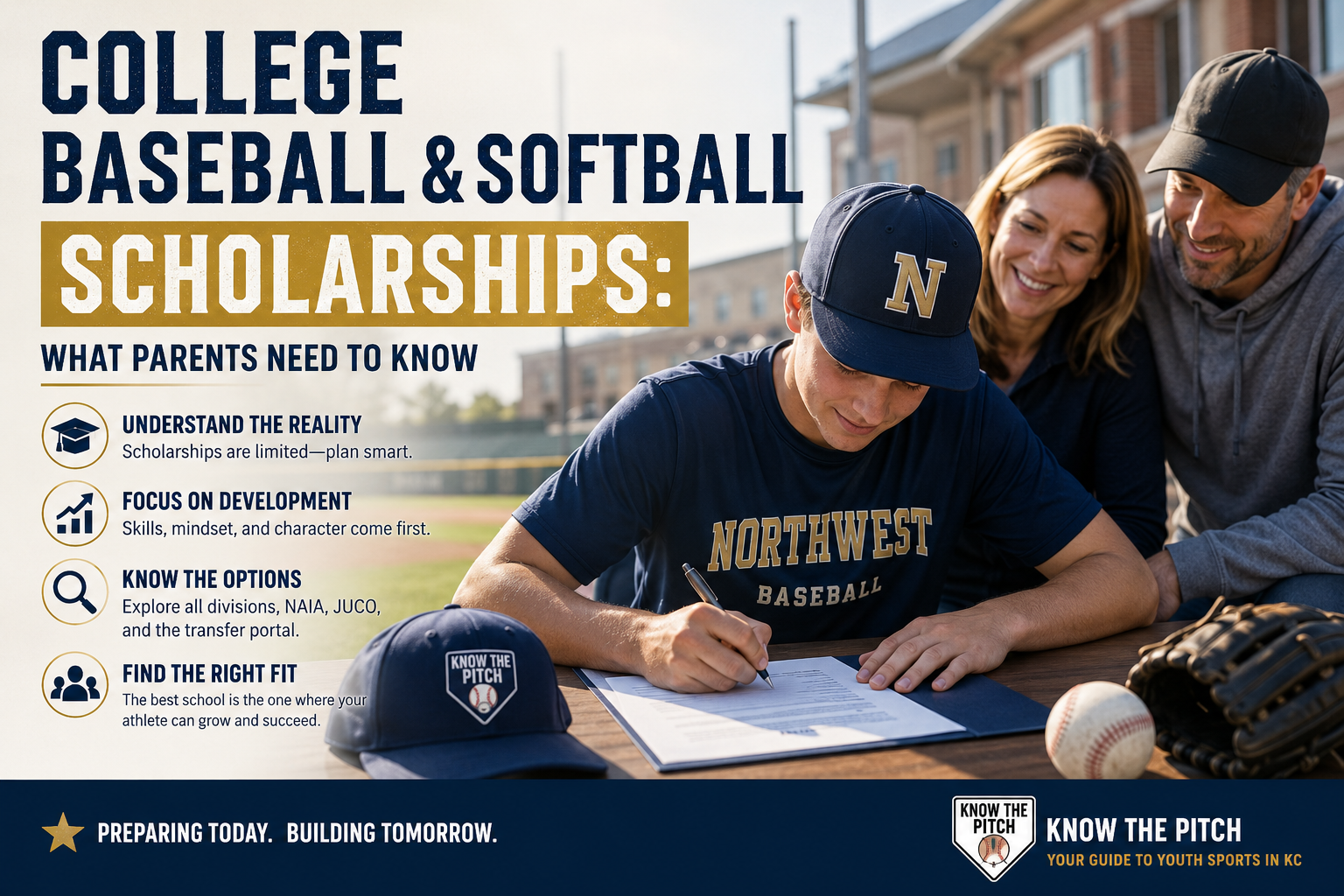
Many sports parents dream of their child earning a college scholarship. It’s easy to understand why. College athletics can provide incredible opportunities, lifelong friendships, and help offset the cost of higher education.
However, when it comes to baseball and softball, the reality is often very different from what many families expect.
According to the National Collegiate Scouting Association (NCSA), only a small percentage of high school athletes go on to play Division I baseball or softball. In baseball, approximately 2% of high school players earn a Division I roster spot, and only a fraction of those athletes receive significant athletic scholarship money. Softball numbers are similarly competitive. Even at the Division I level, full-ride scholarships are relatively uncommon, and many athletes receive partial scholarships that are combined with academic aid and other forms of financial assistance.
Because of this, families should understand that academics often play just as important a role as athletics when it comes to paying for college.
🎯Key Takeaway
Only a small percentage of baseball and softball players earn Division I scholarships. Families should focus on player development, academics, and finding the right fit rather than chasing scholarships at a young age.
Focus on Development First
At the youth level, the primary focus should not be earning a scholarship. Instead, young athletes should focus on developing their skills, understanding the game, and building a strong foundation that will serve them throughout their athletic careers.
Proper development includes much more than physical ability. Athletes need to learn sound mechanics, situational awareness, decision-making, teamwork, and mental toughness.
For example, a player may have the strongest arm on the field, but if they do not understand where the next play is or how to react in game situations, that physical talent becomes far less valuable. College coaches are looking for complete players who can think the game, not just athletes with raw tools.
When evaluating coaches and organizations, parents should look for programs that emphasize developing players physically, mentally, and emotionally. Confidence is built through preparation and improvement. When athletes understand the game and continue to develop their skills, they tend to enjoy the sport more and perform at a higher level.
Everyone knows that when you are playing well, you become more confident, and when you are confident, the game becomes more fun. That confidence often starts with proper instruction, development, and learning to understand the game at a deeper level.
There Are Many Paths to College Athletics
One of the biggest misconceptions in youth sports is that Division I is the only successful outcome.
In reality, there are many excellent opportunities available for student-athletes beyond Division I athletics.
Division I (D1)
Division I represents the highest level of NCAA competition and receives the most attention from families and the media. While scholarships are available, roster spots are extremely competitive.
Division II (D2)
Division II schools offer a high level of competition and athletic scholarships while often providing a more balanced student-athlete experience.
Division III (D3)
Division III schools do not offer athletic scholarships, but many provide generous academic and merit-based aid packages. D3 schools often offer outstanding academics while still allowing athletes to compete at a high level.
NAIA
NAIA programs provide another excellent opportunity for athletes to continue playing while pursuing their educational goals.
Junior College (JUCO)
Junior colleges can be a great option for athletes who develop later physically or academically. Many athletes use the JUCO route as a stepping stone to four-year colleges and universities.
Families should keep an open mind and understand that there are many paths to a successful college athletic experience. A Division II, Division III, NAIA, or JUCO opportunity can be just as rewarding as a Division I opportunity depending on the athlete and their goals.
Different Priorities at Different Ages
Parents often feel pressure to think about recruiting too early. In reality, the priorities should change as athletes grow and mature.
Ages 8U–12U
- Learn proper fundamentals
- Develop athleticism
- Play multiple sports when possible
- Build confidence and a love for the game
- Focus on effort and improvement
Ages 13U–14U
- Continue skill development
- Improve game awareness and baseball/softball IQ
- Develop healthy training habits
- Begin setting realistic long-term goals
Ages 15U–18U
- Evaluate potential college opportunities
- Focus on academics
- Attend camps and showcases strategically
- Communicate with college coaches when appropriate
- Continue improving athletic performance
The earlier years should be focused on development. Recruiting conversations become much more relevant during the high school years.
We have seen athletes make verbal commitments at very young ages only to have their athletic journey take a completely different path. Some athletes physically mature earlier than their peers, while others do not hit their growth spurts until much later in high school. Every athlete develops differently, which is why patience and long-term development are so important.
The Transfer Portal Has Changed Recruiting
Another factor that families should understand is the growing impact of the transfer portal.
College coaches now have access to a large pool of experienced college athletes looking for new opportunities. In many cases, coaches may choose to fill roster spots with transfers who have already proven themselves at the college level rather than recruiting as many high school athletes as they once did.
This does not mean opportunities no longer exist for high school players. It simply means the recruiting landscape has become more competitive and complex. Families should take this into consideration when setting expectations and creating long-term goals.
Keeping Scholarships in Perspective
Travel baseball and softball can be expensive. Between team fees, tournament costs, travel expenses, lessons, equipment, and camps, families can invest tens of thousands of dollars over the course of a player’s youth sports career.
It is not uncommon for a family to spend $50,000 or more over nine years of travel ball only to receive a relatively modest athletic scholarship offer.
That does not mean the investment was wasted.
The value of youth sports extends far beyond scholarship dollars. Athletes gain friendships, discipline, resilience, leadership skills, time management experience, and memories that last a lifetime.
Finding the Right Fit Matters
As athletes reach high school and begin exploring college opportunities, it is important to remember that the “best” school is not always the biggest school or the one offering the most scholarship money.
Finding the right fit academically, athletically, socially, and financially is often far more important than the logo on the front of the jersey. Athletes should consider factors such as coaching style, team culture, academic programs, campus size, distance from home, playing opportunities, and overall quality of life.
The same principle applies long before the recruiting process begins. Whether choosing a youth sports organization, a travel team, a high school program, or a college, families should ask questions and gather as much information as possible before making a commitment.
Some helpful questions include:
- What is the organization’s philosophy on player development?
- How are coaches selected and evaluated?
- What opportunities will my athlete have to improve and grow?
- How is playing time handled?
- What are the expectations for athletes and parents?
- What is the overall culture of the team and organization?
Every athlete is different, and there is no one-size-fits-all path to success. The more informed families are when making decisions, the more likely they are to find an environment where their athlete can develop, compete, and enjoy the experience.
Final Thoughts
The goal of youth baseball and softball should not be chasing scholarships at age 10. It should be finding environments that help young athletes develop, build confidence, and enjoy the game while making informed decisions at every stage of their journey.
Families who prioritize development, academics, and long-term growth often place themselves in the best position when recruiting opportunities eventually arrive. If a college scholarship becomes part of that journey, that is a tremendous accomplishment.
However, success in youth sports should never be measured solely by the amount of scholarship money an athlete receives. The experiences, lessons, friendships, and personal growth gained along the way are often the most valuable rewards of all.
At Know The Pitch, we encourage families to ask questions, do their research, and focus on finding the right fit for their athlete. An informed decision today can have a lasting impact on a young athlete’s development, enjoyment of the game, and future opportunities.
Related Reading
- Know Your Kid: Finding the Right Team Fit
- Should Kids Specialize in One Sport?
- How Parents Can Support a Young Hitter’s Development
- Hidden Costs of Travel Baseball
About the Author
Peggy Smith is a former travel softball national champion, high school state champion, former Division I softball player, middle school English teacher, youth coach, and travel sports parent. She has spent decades involved in youth athletics as a player, coach, educator, and parent. Peggy has coached both baseball and softball—including coaching her own son and daughter—and is passionate about helping families navigate youth sports while emphasizing long-term development, confidence, and enjoyment of the game.