
GameChanger and Player Statistics: What Travel Baseball and Softball Parents Should Know
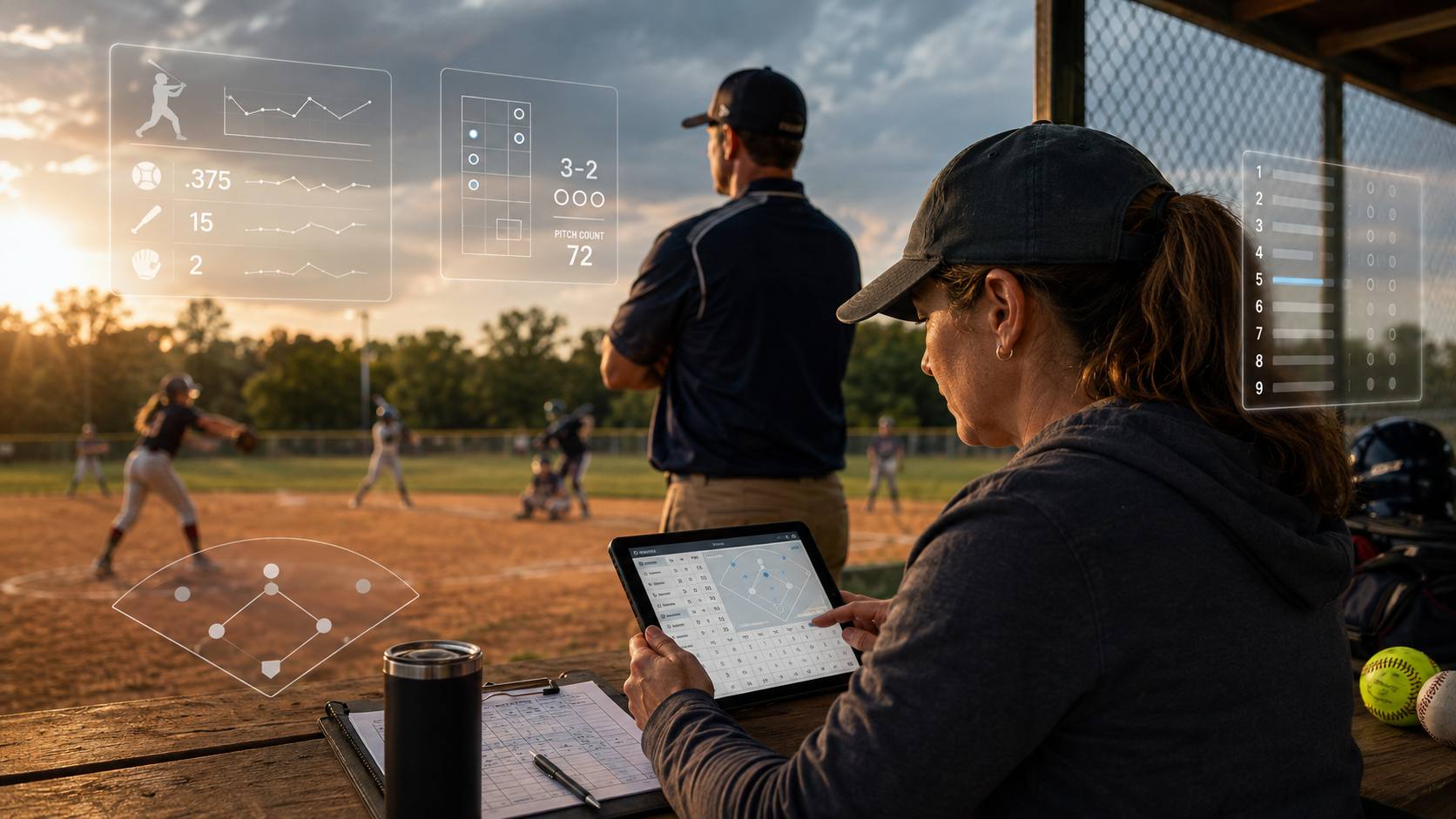
GameChanger can be a valuable tool for travel baseball and softball families. It allows parents, grandparents, and friends to follow games when they cannot attend in person, and it gives teams an easy way to track schedules, scores, video, and player statistics.
On the other hand, GameChanger can also create problems within a team when scoring is inconsistent, parents disagree with how plays are recorded, or coaches rely heavily on statistics that may not tell the full story.
That makes it worth asking not just whether a team uses GameChanger, but who controls it, how accurately it is scored, and how the coaching staff uses the information.
Who Is in Charge of GameChanger?
One question parents may want to ask when joining a team is: Who is responsible for scoring games in GameChanger?
Many teams rely on parent volunteers. This can be helpful because it takes one more responsibility off the coaching staff, but it can also put a parent in a difficult position. Baseball and softball scoring is not always straightforward.
Was a runner’s advancement a stolen base, wild pitch, passed ball, or defensive indifference? Was a ball in play a hit or an error? Should an extra base be attributed to the hitter, the defense, or another part of the play? Reasonable people can interpret the same play differently.
That can become uncomfortable when parents begin questioning or criticizing the volunteer keeping score. What starts as a simple effort to help the team can quickly lead to disagreements, resentment, or even confrontation.
Parents can also unintentionally be biased toward their own children. Most are not intentionally trying to manipulate statistics, but judgment calls involving hits, errors, earned runs, and similar situations can be influenced by who is involved in the play.
For that reason, teams should have a knowledgeable and consistent person responsible for scoring whenever possible.
Having Players Keep Score Can Work — But Only If They Understand the Game
As players get older, some teams ask athletes who are not currently in the game to operate GameChanger. There can be benefits to this approach. It may help players stay engaged, pay closer attention to the game, and learn more about situations and scoring.
However, simply handing GameChanger to a player does not guarantee accurate statistics. If the player does not understand baseball or softball scoring, the resulting statistics can be just as inaccurate as those entered by an inexperienced parent.
If teams choose this approach, players should receive enough instruction to understand the scoring decisions they are being asked to make.
Why Accurate Scoring Matters
Minor GameChanger mistakes may not matter much if the platform is primarily being used to let families follow games. The situation changes when coaches use those statistics to make lineup and playing-time decisions.
Some coaches place significant weight on GameChanger statistics when deciding:
- Batting order
- Playing time
- Pitching opportunities
- Defensive positions
- Starting lineups
If those decisions are being influenced by statistics, then the accuracy of the underlying scoring becomes much more important. A questionable hit-versus-error decision, incorrect earned run, or improperly recorded baserunning play should not determine whether a young athlete receives an opportunity. Statistics can be useful, but they should be one part of a much larger evaluation.
How Much Weight Do Coaches Give GameChanger Statistics?
Parents should understand how a coaching staff evaluates players. Some coaches frequently adjust lineups based on recent statistical performance. Others rely more heavily on what they observe during practices and games and maintain relatively consistent lineups.
Neither approach automatically makes a coach good or bad. However, constantly changing playing time or batting order based on short-term statistics can create significant pressure for young athletes.
Baseball and softball already involve a great deal of failure. A player can hit the ball hard several times and still go 0-for-3. Another player might have two poorly hit balls fall for singles and finish 2-for-3. The stat line does not always tell the story.
Coaches can also observe things GameChanger may not capture well:
- Quality of at-bats
- Situational hitting
- Defensive positioning
- Baserunning decisions
- Effort
- Coachability
- Practice performance
- Game awareness
- Attitude and teamwork
- Long-term development
Parents should be cautious about any environment where short-term statistics become the primary measure of a young athlete.
Questions Parents Should Ask
When considering a travel baseball or softball team, parents may want to ask:
- Who is responsible for GameChanger?
- How experienced is the person keeping score?
- Who can view individual player statistics?
- How much do coaches rely on GameChanger statistics?
- Are batting orders or playing time frequently changed based on statistics?
- How are players evaluated beyond the numbers?
- What happens if a scoring decision is disputed?
These questions may seem unimportant during tryouts, but they can tell you a lot about the culture of a team.
Should Parents Pay Extra to See Player Statistics?
GameChanger offers features that allow families to see additional player statistics, and some teams or organizations provide access through a team subscription. Whether parents need that information is another question.
For younger athletes, we recommend avoiding an excessive focus on individual statistics. Knowing how your child is performing is understandable. But constantly monitoring batting average, ERA, strikeout totals, or other numbers can create unnecessary pressure.
A player who goes 0-for-3 usually already knows the game did not go the way he or she hoped. Immediately discussing how much the performance changed a batting average may not help.
Instead, parents can focus conversations on things athletes can control:
- Did you compete?
- Did you have quality at-bats?
- Did you make good decisions?
- Did you learn something?
- Were you a good teammate?
- What can you work on before the next game?
As athletes reach high school and begin considering college opportunities, statistics naturally become more relevant. Even then, they should remain only one part of evaluating a player.
Keep the Focus on Development
Statistics have an important place in baseball and softball. They can identify trends, help coaches evaluate performance, and give older players useful information about areas for improvement. But GameChanger should remain a tool. It should not become the source of conflict between parents, a reason for young athletes to obsess over every at-bat, or the sole basis for determining who deserves an opportunity. Especially at younger ages, the bigger priorities should remain development, effort, confidence, game knowledge, coachability, and enjoyment of the sport.
Before You Commit to a Team
Before accepting a roster spot, ask how the team handles GameChanger and player statistics. Knowing who keeps score, how statistics are reviewed, and how much influence those numbers have on playing time may tell you much more about the team than its win-loss record.
If coaches rely heavily on GameChanger statistics, parents have every reason to expect those statistics to be recorded as accurately and consistently as possible.
Choosing a Travel Baseball or Softball Organization?
Research travel baseball and softball organizations, learn from other parents’ experiences, and share your own experience to help other families make informed decisions.
Already have experience with an organization? Find it in the directory and share your review.