The Role of a Travel Baseball or Softball Parent: Research, Support and Trust the Process
Understanding the travel baseball and softball parent role can be difficult, especially for parents who have spent years coaching and helping their child develop.
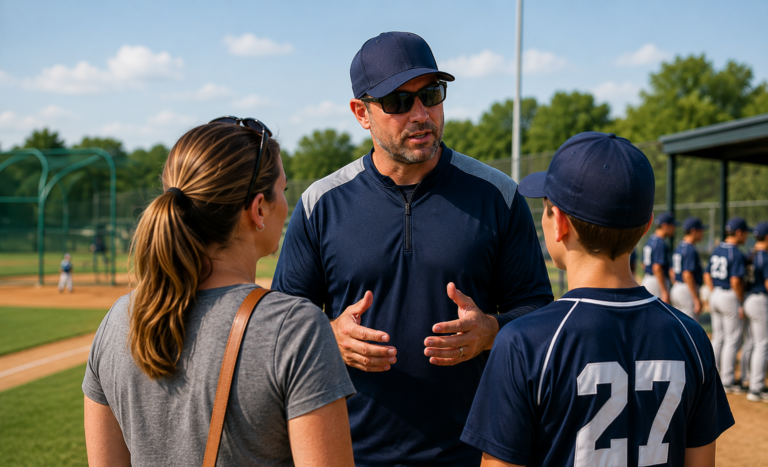
Many parents have coached their children, practiced with them in the backyard, driven them to lessons, and spent countless hours helping them learn the game. After being that involved, it can be difficult to suddenly become more hands-off when your child begins playing for another coach.
But once your family decides to enter travel baseball or softball, the parent’s role begins to change.
Your job becomes less about coaching every pitch, swing, or ground ball and more about doing your research, choosing the right environment, supporting your player, and allowing the coaches to coach.
That doesn’t mean parents should ignore problems or blindly trust every organization. Trust should be earned.
The goal is to choose carefully enough on the front end that, once the season starts, you can give your child and their coaches room to work through the process.
Start With Research
One of a parent’s most important responsibilities begins before a player ever joins a team.
Travel baseball and softball organizations can differ significantly in:
- Coaching philosophy
- Level of competition
- Costs and fees
- Tournament schedules
- Travel expectations
- Practice schedules
- Facilities
- Communication
- Player-development philosophy
- Expectations for players and families
Those differences can have a major impact on your child’s experience.
A highly competitive organization that travels extensively might be perfect for one player and miserable for another. A smaller organization with less travel and more individual instruction could be a much better fit for a different family.
There is no single “best” travel organization for every athlete.
The goal is to find the organization, team, and coach that best fit your child’s ability, personality, goals, and your family’s expectations.
That is also one of the reasons Know The Pitch exists: to give parents more information about travel baseball and softball organizations so families can make better-informed decisions before making a significant commitment of time and money.
A Parent’s Role at Travel Team Tryouts
Tryouts are often stressful for players — and sometimes even more stressful for parents.
Some parents are perfectly comfortable dropping their child off and returning when the tryout is finished. Others prefer to stay and watch.
Either approach can work depending on the player, the parent, and the organization.
If you stay, however, try to spend less time comparing your athlete with every other player and more time evaluating the environment your child may be joining.
Watch the coaches.
Ask yourself:
- Are they organized?
- Do they communicate clearly?
- How do they speak to the players?
- Do they teach during the tryout?
- Are players actively involved, or are they standing around for long periods?
- Does the atmosphere feel competitive but supportive?
- Does the coaching style seem appropriate for your child?
A tryout isn’t only an opportunity for an organization to evaluate your player.
It’s also an opportunity for your family to evaluate the organization.
How coaches teach, communicate, organize drills, respond to mistakes, and interact with players during a tryout can provide valuable clues about what being on that team may be like.
At the same time, remember that your athlete probably already feels plenty of pressure.
They know coaches are evaluating them. Constantly watching every repetition, giving instructions from outside the field, or immediately discussing every mistake can add even more stress.
Sometimes the best thing a parent can do during a tryout is simply watch.
What Coaches May Notice During Tryouts
Every organization and coach evaluates players differently. Talent and physical ability obviously matter, but tryouts often reveal much more than whether a player can hit, throw, field, or pitch.
Several characteristics can help a player make a positive impression.
Coachability
Coachability begins as soon as a player arrives.
Players should listen when coaches are speaking, make eye contact when appropriate, follow directions, and show that they are willing to make adjustments.
A player who listens to feedback and attempts to apply it gives coaches information about how that athlete may respond during practices and games.
Attitude
Attitude can affect an entire team.
Players should encourage teammates, respond appropriately when something goes wrong, and avoid allowing one bad play or at-bat to affect everything that follows.
Travel seasons are long. Coaches aren’t simply building a collection of individual players — they’re building a team.
How an athlete reacts to success, failure, teammates, and coaching can matter.
Hustle
Players should hustle throughout the tryout, not just when they think a coach is watching.
That can be difficult when other players are walking between stations or showing less urgency.
But consistent effort is one of the simplest things an athlete can control.
Hustling between drills, moving with purpose, and staying engaged can demonstrate effort, preparation, and a willingness to compete.
Confidence
Players don’t have to be the loudest or most naturally outgoing athlete at a tryout.
But they should be willing to participate.
Confidence can be demonstrated by volunteering for a drill, communicating on the field, moving with purpose, and continuing to compete after making a mistake.
A player who makes an error and immediately gets ready for the next opportunity may make a stronger impression than one who allows the mistake to affect the rest of the tryout.
Fundamentals
Most tryouts provide only a limited number of opportunities to field ground balls, catch fly balls, throw, pitch, or hit.
Not every opportunity will go perfectly.
Players should focus on using good fundamentals, listening to instructions, competing, and responding positively when something goes wrong.
Sometimes how an athlete reacts after an error can tell a coach nearly as much as the error itself.
The Travel Baseball and Softball Parent Role During the Season
Once the team has been selected and the season begins, the parent’s role changes again.
This is where things can become difficult.
You may notice something in your child’s swing. You may disagree with how they’re playing a defensive position. You may believe they should steal, bunt, throw a certain pitch, or approach an at-bat differently.
And because you want your child to succeed, the instinct to help can be strong.
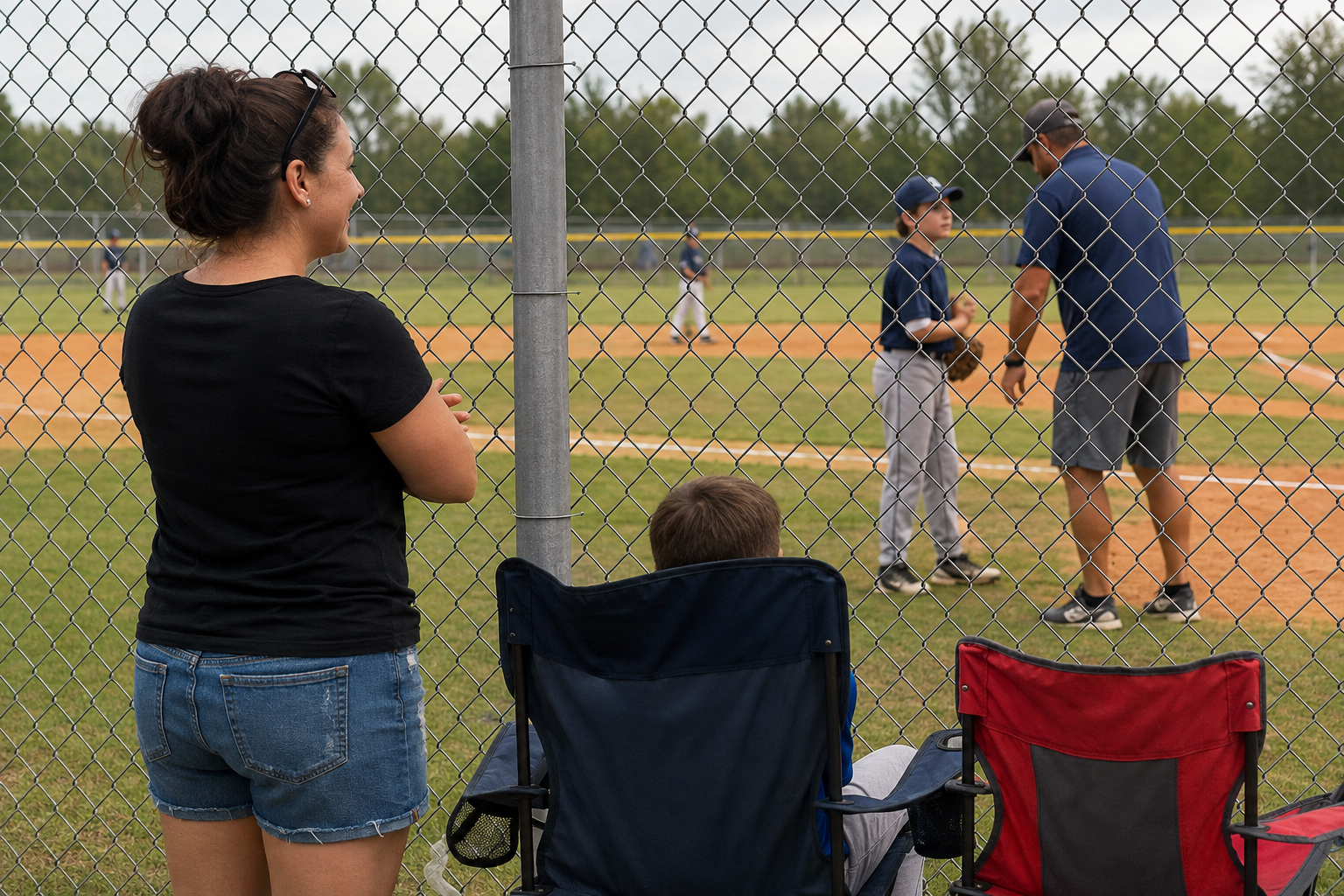
But constant coaching from the stands can create problems.
Your instructions may conflict with what the coach has asked your player to do. More importantly, your child may hear those comments very differently than you intend them.
Baseball and softball already create plenty of opportunities for players to put pressure on themselves.
The slower pace of the games gives athletes time to think about the error they just made, worry about their next at-bat, replay a strikeout, or wonder whether they’ll get another opportunity.
They usually don’t need another coach in the stands.
They need a parent.
Your child should know that your support isn’t dependent on:
- Batting average
- Fielding percentage
- Pitching statistics
- Playing time
- Where they hit in the lineup
- Whether their team won
- What GameChanger says after the game
Celebrate effort.
Celebrate preparation.
Celebrate improvement.
Celebrate sportsmanship.
Celebrate the courage it takes to compete, fail, adjust, and try again.
What GameChanger says after the game
Be Careful With the Conversations Your Player Hears
Travel sports require a significant commitment of time, money, and energy.
Parents will occasionally become frustrated.
Maybe you disagree with a coaching decision. Maybe your child isn’t getting the playing time you expected. Maybe communication has been poor. Maybe you’re frustrated with another family or something happening within the organization.
Those concerns can be legitimate.
But repeatedly criticizing the coach, team, or organization around your child can change how your player views the experience.
Children take cues from their parents.
A player who was previously happy with a team may begin seeing every coaching decision negatively if those decisions are constantly criticized at home or during the ride back from the field.
That doesn’t mean you should ignore legitimate concerns.
It means those concerns should be handled thoughtfully.
Help Your Child Learn to Advocate for Themselves
When your child is frustrated, start by listening.
Before immediately contacting the coach, help your player think through the situation.
What happened?
What are they concerned about?
Is there something they can control?
Is there something they don’t understand?
Could they respectfully ask the coach about it themselves?
As players get older, learning how to communicate with coaches and advocate for themselves can become an important part of their development.
When appropriate, encourage your child to speak with the coach first.
There will still be situations where a parent needs to become involved. If a concern is serious, ongoing, involves safety, or hasn’t been resolved through appropriate player-coach communication, a parent may need to request a conversation.
When that happens, the goal should be to understand the situation and advocate for your child — not to confront a coach in the parking lot immediately after a game.
Trust the Process — But Remember That Trust Must Be Earned
“Trust the process” doesn’t mean parents should ignore warning signs.
It doesn’t mean accepting poor communication.
It doesn’t mean remaining silent if your child is being treated unfairly or placed in an unsafe environment.
Trusting the process means doing enough research before committing to an organization that you feel reasonably comfortable allowing its coaches to do their jobs.
No organization will be perfect.
No coach will make every decision the way you would make it.
Your child won’t always play the position you prefer, bat where you think they should bat, or receive exactly the amount of playing time you expected.
But families should still be able to expect certain fundamentals from a travel organization:
- Honesty
- Communication
- Respect
- Player safety
- Reasonable organization
- A genuine commitment to player development
When those things are present, parents should try to give coaches room to coach and players room to develop.
Parents Can Help Other Parents
One of the best sources of information about a travel baseball or softball organization is often another parent who has already experienced it.
That doesn’t mean every review needs to be glowing — or negative.
The most useful reviews are balanced.
They explain what an organization does well, what families should understand before joining, what expectations exist, and what type of player or family may be the best fit.
Sharing that kind of firsthand information helps other parents make better decisions.
And when families make better-informed decisions before joining a team, players, parents, coaches, and organizations all have a better chance of having a positive experience.
That’s ultimately what Know The Pitch is about: helping families better understand their options before making one of the biggest commitments in youth sports.
Have experience with a travel baseball or softball organization? Find the organization on Know The Pitch and share your experience directly on its page to help other families make a more informed decision.